On-Page SEO Checklist for Beginners (Practical Optimization Guide 2026)
On-Page SEO Checklist for Beginners (2026 Edition)
If your website is indexed but still not ranking well, the problem is often on-page SEO.
On-page SEO is everything you optimize inside your page to help search engines understand and rank your content.
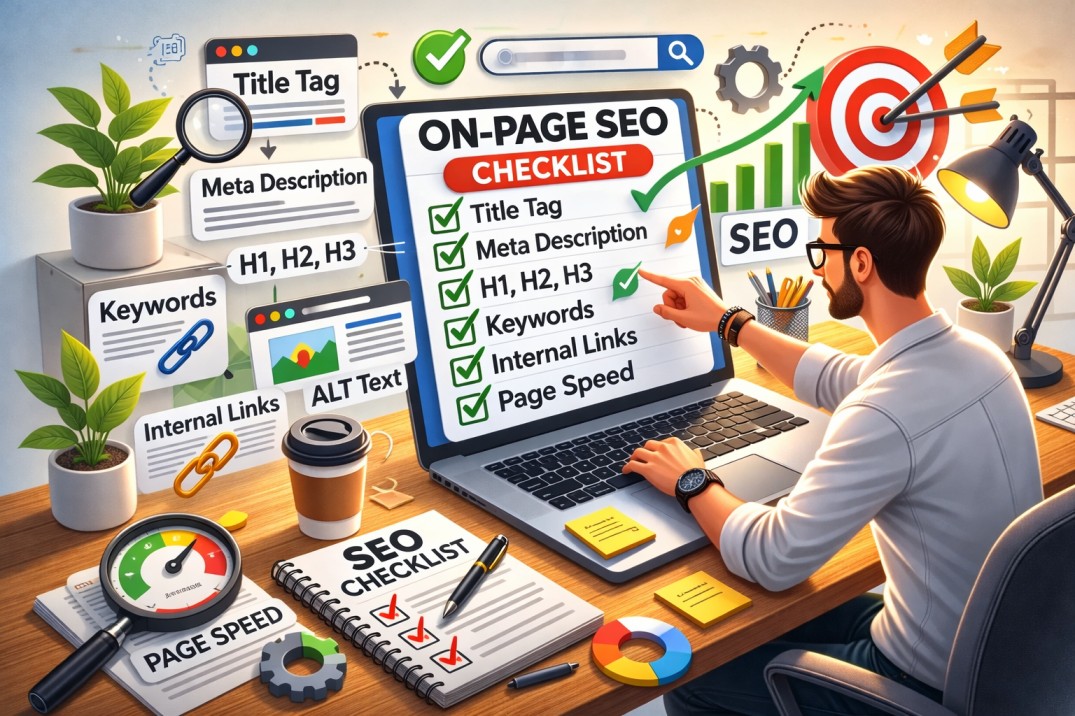
This checklist will show you exactly what to fix — step by step.
✅ 1. Optimize Your Page Title (Title Tag)
Your title is the most important on-page factor.
Checklist:
-
Include your main keyword once
-
Keep it under 60 characters
-
Make it clear and specific
-
Add a benefit or result
Example:
❌ SEO Guide
✅ On-Page SEO Checklist for Beginners (Step-by-Step)
Your title should improve:
-
Click-through rate (CTR)
-
Keyword relevance
-
Search visibility
✅ 2. Write a Strong Meta Description
Meta descriptions don’t directly affect ranking — but they affect clicks.
Checklist:
-
140–160 characters
-
Include main keyword naturally
-
Explain what the user will learn
-
Add a soft call-to-action
Example structure:
Learn how to optimize your website using this practical on-page SEO checklist designed for beginners.
Higher CTR = better ranking signals.
✅ 3. Use One Clear H1 Heading
Every page must have:
-
Only ONE H1
-
The main keyword included
-
Clear description of the page topic
Bad example:
Multiple H1 headings.
Good example:
H1 = On-Page SEO Checklist for Beginners
✅ 4. Structure Content With H2 and H3
Google scans structure before content.
Checklist:
-
Use H2 for main sections
-
Use H3 for subpoints
-
Keep paragraphs short
-
Avoid large text blocks
Clean structure improves:
-
Readability
-
Crawlability
-
User engagement
✅ 5. Optimize URL Structure
Your URL should be:
-
Short
-
Clean
-
Keyword-focused
-
No random numbers
Bad:
your website.com/page?id=12345
Good:
your website.com/on-page-seo-checklist
Simple URLs rank better and look more trustworthy.
✅ 6. Improve Keyword Placement (Without Stuffing)
Your main keyword should appear:
-
In title
-
In H1
-
In first 100 words
-
In one or two subheadings
-
Naturally in content
Avoid:
❌ Repeating keyword unnaturally
❌ Keyword stuffing
Google understands context — write naturally.
Also remember that SEO tools may show different keyword density or scoring results, and this is completely normal.
✅ 7. Optimize Images Properly
Images affect SEO more than people think.
Checklist:
-
Compress image size
-
Use descriptive file names
-
Add ALT text with context
-
Avoid huge image dimensions
Example ALT text:
on page seo checklist example structure
This helps:
-
Image search visibility
-
Accessibility
-
Page speed
✅ 8. Improve Internal Linking
Internal links help Google:
-
Discover new pages
-
Understand your site structure
-
Pass authority
Checklist:
-
Link to related articles
-
Use descriptive anchor text
-
Avoid generic “click here”
Example:
Instead of:
Click here
Use:
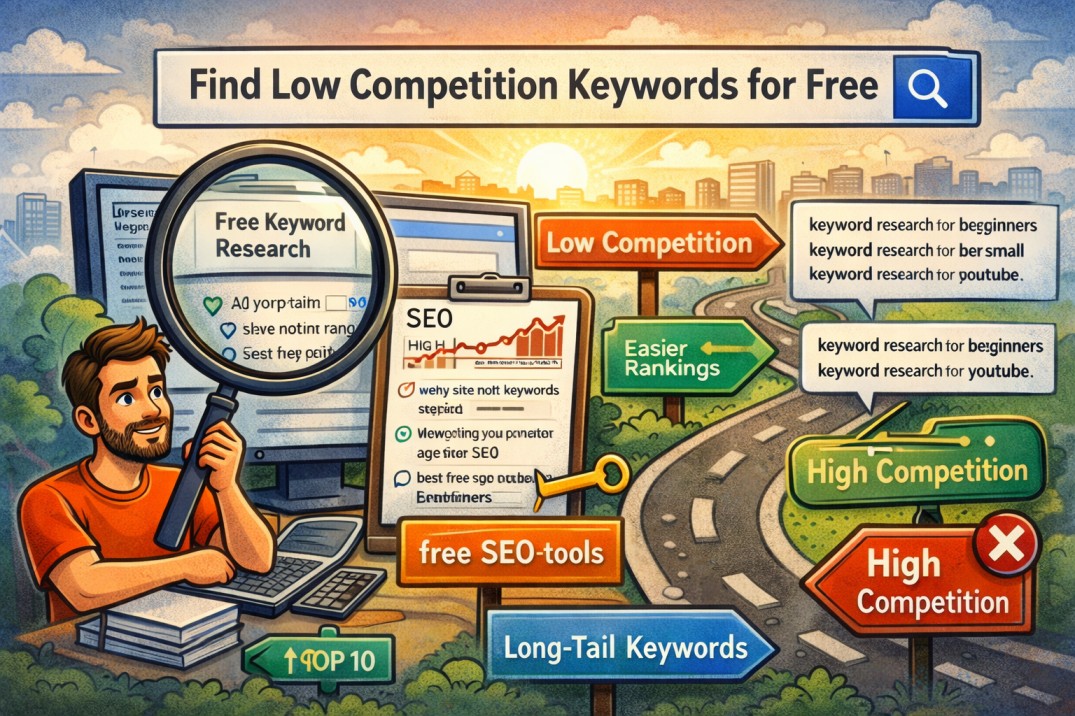
learn how to find low competition keywords
✅ 9. Optimize for Search Intent
Before publishing, ask:
What does the user expect?
If the keyword is:
“on page seo checklist”
User expects:
✔ Practical list
✔ Clear steps
✔ Easy implementation
If your page doesn’t match intent → ranking will drop.
✅ 10. Improve Page Speed
Slow pages lose rankings. Use website performance and speed testing tools to identify technical issues affecting load time.
Check:
-
Image size
-
Hosting performance
-
Script load time
-
Unnecessary plugins
A fast page improves:
-
User experience
-
Engagement
-
Ranking signals
✅ 11. Add FAQ Section
FAQ helps you:
-
Rank for question keywords
-
Increase topical depth
-
Improve featured snippet chances
Example FAQ:
What is on-page SEO?
How long does on-page SEO take to work?
Is on-page SEO enough to rank?
FAQ increases semantic coverage.
✅ 12. Improve Content Depth
Thin content doesn’t rank.
Before publishing, check:
-
Did you answer the topic completely?
-
Is your content better than page 1 results?
-
Did you provide examples?
Quality beats word count — but depth matters.
🚀 Beginner On-Page SEO Quick Audit
Before publishing any page, confirm:
✔ Title optimized
✔ Meta description written
✔ One H1 only
✔ Clean URL
✔ Keyword naturally placed
✔ Internal links added
✔ Images optimized
✔ Content structured
✔ Page loads fast
If all checked → your page is ready.
If you want a full overview of essential optimization utilities, check our complete SEO tools guide.
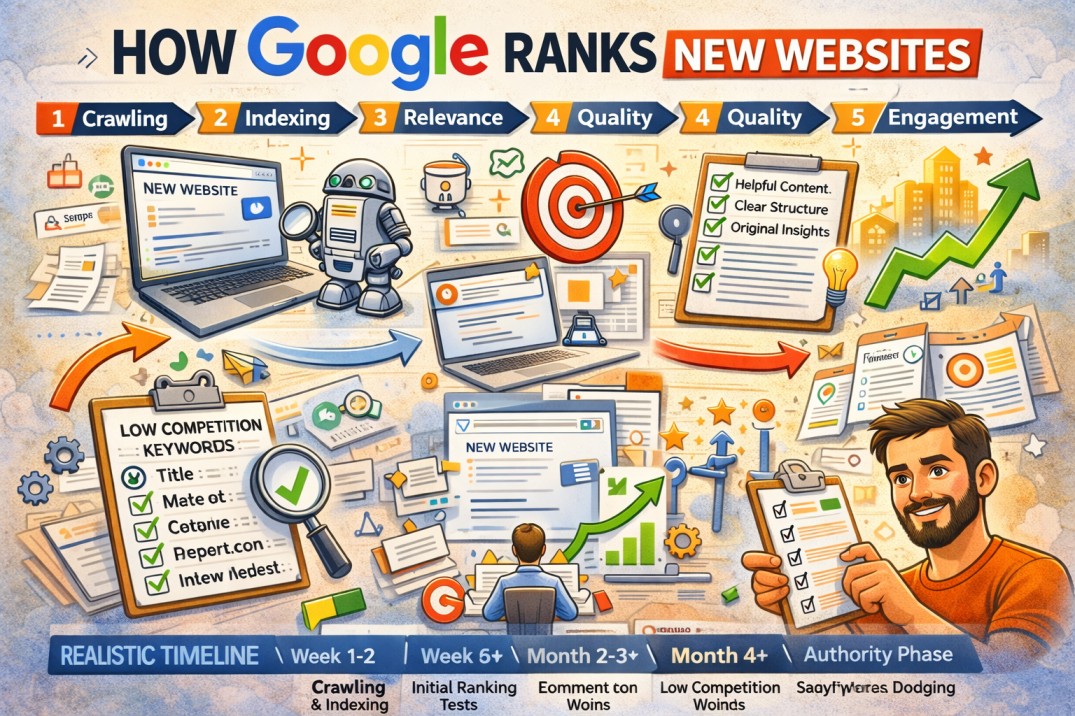
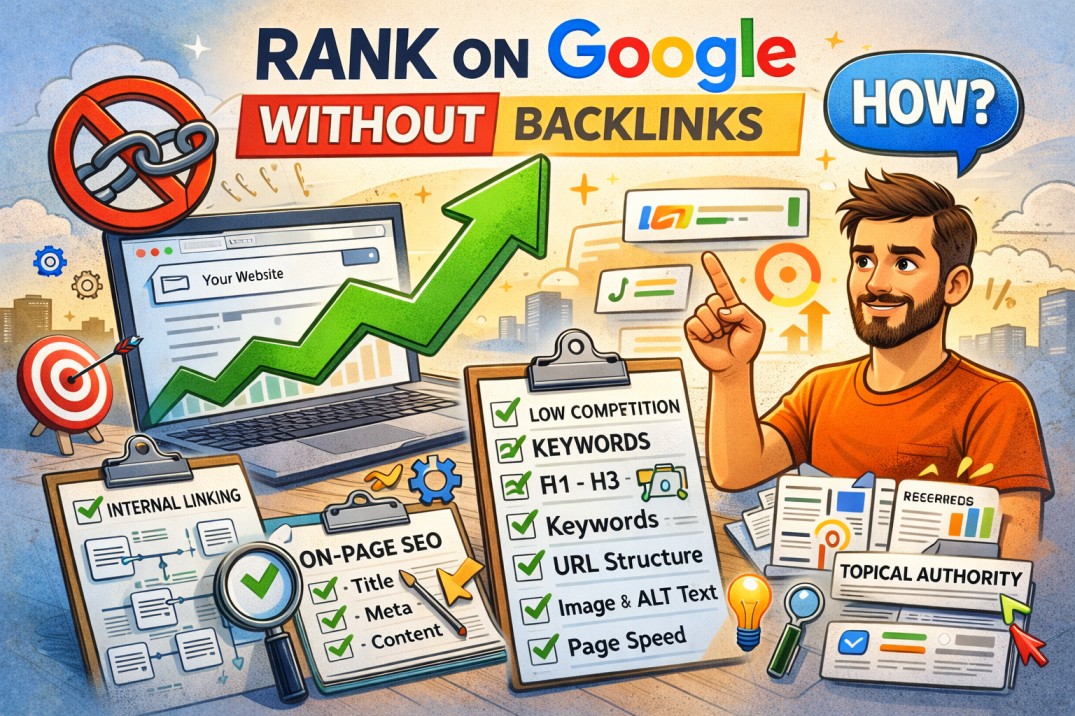
📈 Why On-Page SEO Is Powerful for New Websites
New websites usually:
-
Don’t have backlinks
-
Don’t have authority
-
Don’t have strong domain signals
But on-page SEO is fully under your control.
In fact, you can improve website SEO without paid tools if you focus on proper structure and optimization fundamentals.
That’s your advantage.
Master it first — then build authority later.
FAQ Section
Is on-page SEO enough to rank?
For low competition keywords, yes. For competitive terms, you’ll also need authority signals.
How long does on-page SEO take to show results?
Usually between 2–6 weeks depending on competition.
What is the most important on-page factor?
Title tag and search intent alignment.